Projectorsfor Home

Best Projector for Sports

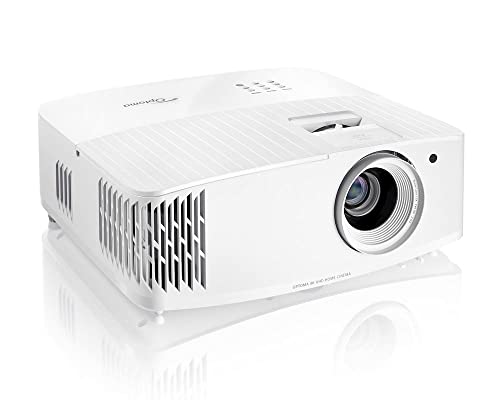
The Optoma UHD38x (~$1,100) is the best projector for watching sports. At 4,000 lumens, it is bright enough for daytime viewing during afternoon games, delivers 4K resolution with 240Hz capable motion handling for smooth fast action, and excellent motion clarity for panning shots across the field. For the ultimate Super Bowl party projector, the Epson EpiqVision Ultra LS800 (~$3,500) is a UST with 4,000 lumens that creates a massive image from inches away.

Not sure which projector? Find your match in 60 seconds.

Take our quiz

Top 3 Picks

Optoma UHD38x
8.2/10

$1100

The brightest 4K gaming projector at 4,000 lumens. Great for sports and daytime viewing with low input lag.

The brightest projector in its price class at 4,000 lumens, which is critical for watching afternoon games with ambient light. 4K resolution, 240Hz motion handling for smooth fast action, and excellent motion clarity during panning shots. Needs external speakers but the brightness advantage for daytime sports is decisive.

4K UHD (DLP)4,000 lumensStandard throw (1.50-1.66:1)4.2ms (1080p/240Hz) input lag
Pros
  • + 4,000 lumens (brightest in class)
  • + 4.2ms input lag at 1080p/240Hz
  • + True 4K UHD resolution
  • + HDR10 and HLG support
  • + Long throw for large screens
Cons
  • - Lamp-based (4,000-hour life)
  • - No smart OS or streaming
  • - DLP rainbow effect possible
Check Price on Amazon
Epson Home Cinema 3800
9/10

$1100

The best value home projector. 80% of the 5050UB's performance at a third of the price.

3,000 lumens with 4K PRO-UHD and excellent color accuracy make sports look vibrant and natural. Better built-in motion handling than most competitors, and the 10W speakers are usable for small gatherings. A great dual-purpose sports and movie projector at $1,100.

4K PRO-UHD (pixel shift)3,000 lumensStandard throw (1.32-2.15:1)28ms (4K/60Hz) input lag
Pros
  • + Excellent 4K PRO-UHD image quality
  • + 3,000 lumens works in most rooms
  • + Full 10-bit HDR support
  • + 3LCD eliminates rainbow effect
  • + Outstanding value at $1,100
Cons
  • - Lamp-based (5,000-hour life)
  • - Lower contrast than 5050UB
  • - No lens memory for scope screens
Check Price on Amazon
Hisense PX2-PRO
8.7/10

$2500

The best ultra-short throw TV replacement. TriChroma laser delivers vivid 4K from inches away with Dolby Vision.

Ultra-short-throw design means no shadows from people walking around during the game. 2,400 lumens with TriChroma laser handles living room light, Google TV makes accessing streaming sports apps simple, and Dolby Atmos speakers provide solid audio for watch parties without a separate sound system.

4K UHD2,400 lumensUltra-short throw (0.25:1)30ms input lag
Pros
  • + Ultra-short throw sits below the screen
  • + TriChroma laser for wide color gamut
  • + Dolby Vision and Atmos support
  • + Google TV with Netflix built in
  • + 2,400 lumens handles ambient light
Cons
  • - Requires dedicated ALR screen ($500+)
  • - Fixed throw ratio (no zoom)
  • - Audio quality is average
Check Price on Amazon

What We Look For

Brightness for daytime viewing, motion handling/frame interpolation, input lag for live TV, speaker quality, screen size.

Buying Guide

Sports watching is brightness-dependent because games happen during the day. This is the fundamental challenge: a Sunday afternoon football game at 1 PM means your projector competes with ambient light from windows. You need 2,500+ lumens minimum for watchable daytime viewing, and 3,500+ lumens for a comfortable image in a bright room. The Optoma UHD38x's 4,000 lumens is why it leads this category. Brightness is more important than resolution, contrast, or any other spec for sports viewing because a dim image makes the entire experience frustrating.

Motion Handling for Fast Sports Action

Sports involve fast camera pans across fields, quick player movements, and rapid ball tracking. Frame interpolation (MEMC) helps smooth these motions by generating intermediate frames. The XGIMI HORIZON 20 Max has the best MEMC implementation in our picks, producing noticeably smoother panning shots. DLP projectors like the Optoma UHD38x have inherently faster pixel response than LCD projectors, which reduces motion blur at the pixel level. For sports, enable any "sports mode" or "motion compensation" setting your projector offers.

Audio for Watch Parties

Sports are a social viewing experience, and audio matters. Built-in projector speakers are fine for 2-4 people watching casually, but for a real watch party with 8+ people, external audio is essential. A soundbar like the Vizio V-Series 2.1 (~$150) provides clear dialogue (for commentary), solid bass (for crowd noise), and enough volume for a room full of people. Pair via Bluetooth or HDMI ARC. Position the soundbar below the screen for the most natural audio experience. The Hisense PX2-PRO's built-in Dolby Atmos speakers are an exception, providing enough audio for most gatherings without a separate speaker.

Seasonal Setup Opportunities

Sports projectors have natural tie-ins throughout the year: Super Bowl in February, March Madness in March, World Cup, NFL Sundays, and playoff seasons across every sport. If you are building a dedicated sports viewing setup, plan for both indoor and outdoor use. The same Optoma UHD38x that handles a Super Bowl party in your living room can power an outdoor viewing party in the backyard during warm-weather games. Check our living room guide for ambient light strategies and our backyard guide for outdoor viewing setups.
Frequently Asked Questions

What projector is best for watching football?

The Optoma UHD38x (~$1,100) is the best projector for football. Its 4,000 lumens handles the ambient light you get during afternoon games, 4K resolution makes player details and scoreboard text crisp on a large screen, and 240Hz motion handling keeps fast action smooth without blur. Pair it with a soundbar and you have a sports bar experience at home. For Sunday afternoon games with windows open, brightness is the spec that matters most.

Can I use a projector for daytime sports viewing?

Yes, but you need serious brightness. For daytime viewing with curtains drawn, 2,500+ lumens works. For a room with windows letting in direct sunlight, you need 3,500+ lumens. The Optoma UHD38x at 4,000 lumens and the Epson LS800 at 4,000 lumens are the best options for daytime sports. Pairing any bright projector with an ambient light rejecting (ALR) screen further improves daytime contrast. Budget projectors under 1,000 lumens will be unwatchable during the day.

Best projector for Super Bowl party?

For a Super Bowl party, you want a big screen that handles a room full of people and ambient light. The Epson LS800 (~$3,500) is the ultimate choice: ultra-short-throw design means no one casts shadows walking in front, 4,000 lumens fights party lighting, and it projects 100-120 inches from inches away. The Optoma UHD38x (~$1,100) is the budget-friendly party option with equal brightness. Pair either with a quality soundbar for the full game-day experience.

Do projectors have motion blur for sports?

Some do, but modern projectors with frame interpolation (also called MEMC or motion compensation) handle sports well. The XGIMI HORIZON 20 Max has dedicated MEMC that smooths panning shots across the field. The Optoma UHD38x's 240Hz processing helps with fast action. DLP projectors (Optoma, BenQ) generally have faster pixel response than LCD (Epson), which reduces motion blur. For sports, motion handling matters more than for movies, so look for projectors with dedicated sports or motion modes.

Related Guides

As an Amazon Associate, projectorsforhome.com earns from qualifying purchases. Prices are approximate and may change. Product information is provided without warranty.