Projectorsfor Home

Best Projector for Home Theater

The Epson Home Cinema 5050UB (~$3,000) is the gold standard for home theater under $5K. It delivers 4K PRO-UHD resolution with 1,000,000:1 contrast ratio via UltraBlack technology, motorized lens with lens memory for scope switching, and 10-bit HDR. If that's over budget, the Epson Home Cinema 3800 (~$1,100) delivers 80% of the performance at one-third the price.

Not sure which projector? Find your match in 60 seconds.

Take our quiz

Top 3 Picks

Epson Home Cinema 5050UB
9.3/10

$3000

The best home theater projector for dedicated dark rooms. Pixel-shift 4K with class-leading contrast and color accuracy.

The gold standard for home theater under $5K. 4K PRO-UHD with 1,000,000:1 contrast via UltraBlack technology, motorized lens with lens memory for switching between 16:9 and 2.35:1 aspect ratios, and 10-bit HDR processing. This is the projector cinephiles recommend.

4K PRO-UHD (pixel shift)2,600 lumensStandard throw (2.1x zoom)28ms (4K/60Hz) input lag
Pros
  • + Exceptional contrast with motorized iris
  • + 4K PRO-UHD pixel-shift technology
  • + Full 10-bit HDR with wide DCI-P3 gamut
  • + Lens shift and 2.1x zoom for flexible placement
  • + 3LCD eliminates rainbow effect
Cons
  • - Lamp-based (5,000-hour life)
  • - Large and heavy at 24.7 lbs
  • - Needs a dark room for best results
Check Price on Amazon
Epson Home Cinema 3800
9/10

$1100

The best value home projector. 80% of the 5050UB's performance at a third of the price.

Delivers 80% of the 5050UB's performance at one-third the price. 4K PRO-UHD with 3,000 lumens, excellent color accuracy out of the box, and low enough input lag for casual gaming. The best value dedicated theater projector available.

4K PRO-UHD (pixel shift)3,000 lumensStandard throw (1.32-2.15:1)28ms (4K/60Hz) input lag
Pros
  • + Excellent 4K PRO-UHD image quality
  • + 3,000 lumens works in most rooms
  • + Full 10-bit HDR support
  • + 3LCD eliminates rainbow effect
  • + Outstanding value at $1,100
Cons
  • - Lamp-based (5,000-hour life)
  • - Lower contrast than 5050UB
  • - No lens memory for scope screens
Check Price on Amazon
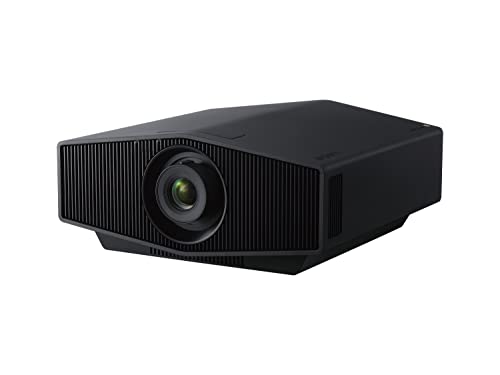
Sony VPL-XW5000ES
9.5/10

$5500

The reference-grade native 4K laser projector for cinephiles who demand the absolute best image quality.

Native 4K SXRD with a laser light source for buyers who want the absolute best under $6K. Outstanding HDR tone mapping, no pixel-shifting artifacts, and a 20,000-hour laser that eliminates bulb replacements entirely.

Native 4K (4096x2160)2,000 lumensStandard throw (1.38-2.21:1)21ms (4K/60Hz) input lag
Pros
  • + True native 4K SXRD panels
  • + Laser light source (20,000-hour life)
  • + Stunning HDR tone mapping
  • + Whisper-quiet 24dB operation
  • + Cinema-quality color accuracy
Cons
  • - Premium price at $5,500
  • - Only 2,000 lumens (dark room required)
  • - No built-in smart platform
Check Price on Amazon

What We Look For

Image quality in a controlled-light environment. Contrast ratio, HDR support, 4K resolution.

Buying Guide

Home theater projectors are designed for light-controlled rooms. If you have a dedicated space where you can block out windows and control ambient light, you unlock the best image quality a projector can produce. In a dark room, contrast ratio becomes the most important spec because your eyes can see the full dynamic range from deep blacks to bright highlights. The Epson 5050UB's 1,000,000:1 contrast with UltraBlack is why it dominates this category.

4K Resolution: When It Matters

At screen sizes above 100 inches and seating distances of 8-12 feet, 4K resolution is a visible upgrade over 1080p. You will see finer detail in facial textures, landscapes, and complex scenes. Below 100 inches, the difference between 1080p and 4K shrinks significantly. Epson's PRO-UHD pixel-shifting technology produces results that are virtually indistinguishable from native 4K at normal viewing distances, and it costs thousands less than true native 4K from Sony.

HDR in a Projector: Temper Your Expectations

Projectors cannot match OLED TVs for HDR peak brightness, but good HDR tone mapping makes a real difference in home theater. The Epson 5050UB and Sony VPL-XW5000ES both handle HDR well, expanding the color gamut and improving shadow detail in dark scenes. The key is proper HDR calibration for your screen size and room conditions. Out-of-the-box HDR settings on most projectors tend to be too dim, so plan to spend an hour dialing in the picture.

Don't Forget the Screen

A dedicated home theater deserves a proper projection screen. A white wall works in a pinch, but a screen improves contrast by 30-50% and eliminates wall texture. For home theater, a fixed-frame screen is the best option because it stays perfectly flat and tensioned. The Silver Ticket STR-169100 at ~$220 is the go-to recommendation for budget-conscious theater builders. Check out our accessories page for screen recommendations across every use case.

Frequently Asked Questions

What's the best projector for a dark room?

The Epson Home Cinema 5050UB (~$3,000) is the best dark room projector. Its 1,000,000:1 contrast ratio with UltraBlack technology produces the deepest blacks of any projector under $5,000, which is critical in a light-controlled room where black levels are fully visible. The motorized lens with lens memory lets you switch between 16:9 and 2.35:1 cinemascope ratios without manual adjustment. If your budget is tighter, the Epson 3800 (~$1,100) is an excellent alternative.

Do I need a 4K projector for home theater?

At screen sizes above 100 inches at normal viewing distances (8-12 feet), 4K makes a visible difference. Below 100 inches, 1080p looks great and saves you $500-$2,000. That said, even pixel-shift 4K (like Epson's PRO-UHD) is a meaningful upgrade over 1080p at larger screen sizes. True native 4K starts at around $5,500 with the Sony VPL-XW5000ES. For most home theater setups, pixel-shift 4K from the Epson 5050UB or 3800 is indistinguishable from native at normal seating distances.

What projector do cinephiles recommend?

Cinephiles overwhelmingly recommend the Epson 5050UB for under $5K and the Sony VPL-XW5000ES for under $6K. The Epson wins on contrast and value, while the Sony wins on native resolution and laser longevity. Both deliver exceptional color accuracy, HDR support, and the kind of image quality that makes a dedicated theater room worth building. Screen pairing matters just as much as the projector itself, so budget for a quality screen like the Silver Ticket STR-169100.

What screen should I pair with a home theater projector?

For a dedicated dark room, a 1.0-1.3 gain white screen is ideal. The Silver Ticket STR-169100 100-inch fixed frame (~$220) is the best value option. Fixed frame screens provide a perfectly flat surface with no wrinkles, which is critical for image quality at this level. For larger rooms, 120-inch screens are available. Avoid high-gain screens in a dark room as they narrow the viewing angle and can create hotspotting in the center of the image.

Related Guides

As an Amazon Associate, projectorsforhome.com earns from qualifying purchases. Prices are approximate and may change. Product information is provided without warranty.