Projectorsfor Home

Best 4K Projector for Home

The Epson Home Cinema 5050UB (~$3,000) is the best 4K projector for most buyers. Its 4K PRO-UHD pixel-shifting technology is indistinguishable from native 4K at normal viewing distances, and its 1,000,000:1 contrast ratio is the best under $5,000. For true native 4K with zero pixel-shifting, the Sony VPL-XW5000ES (~$5,500) is the real deal. For the best value 4K in a living room, the Hisense C2 Ultra (~$1,800) delivers 4K tri-laser with 3,200 lumens.

Not sure which projector? Find your match in 60 seconds.

Take our quiz

Top 3 Picks

Epson Home Cinema 5050UB
9.3/10

$3000

The best home theater projector for dedicated dark rooms. Pixel-shift 4K with class-leading contrast and color accuracy.

4K PRO-UHD pixel-shifting that is indistinguishable from native 4K at normal seating distances, combined with the best contrast ratio under $5,000 at 1,000,000:1. Motorized lens with memory, 10-bit HDR, and 2,600 lumens. The sweet spot of 4K performance and value for dedicated theater rooms.

4K PRO-UHD (pixel shift)2,600 lumensStandard throw (2.1x zoom)28ms (4K/60Hz) input lag
Pros
  • + Exceptional contrast with motorized iris
  • + 4K PRO-UHD pixel-shift technology
  • + Full 10-bit HDR with wide DCI-P3 gamut
  • + Lens shift and 2.1x zoom for flexible placement
  • + 3LCD eliminates rainbow effect
Cons
  • - Lamp-based (5,000-hour life)
  • - Large and heavy at 24.7 lbs
  • - Needs a dark room for best results
Check Price on Amazon
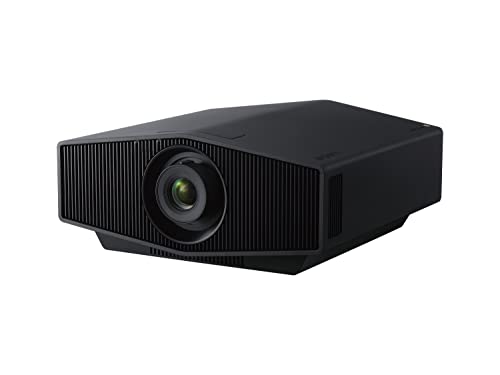
Sony VPL-XW5000ES
9.5/10

$5500

The reference-grade native 4K laser projector for cinephiles who demand the absolute best image quality.

Native 4K SXRD with no pixel-shifting for resolution purists who want the absolute best. Laser light source means 20,000 hours of consistent brightness with no bulb replacements. Outstanding HDR tone mapping and color accuracy. Premium pricing justified by genuinely superior 4K detail.

Native 4K (4096x2160)2,000 lumensStandard throw (1.38-2.21:1)21ms (4K/60Hz) input lag
Pros
  • + True native 4K SXRD panels
  • + Laser light source (20,000-hour life)
  • + Stunning HDR tone mapping
  • + Whisper-quiet 24dB operation
  • + Cinema-quality color accuracy
Cons
  • - Premium price at $5,500
  • - Only 2,000 lumens (dark room required)
  • - No built-in smart platform
Check Price on Amazon
Hisense C2 Ultra
8.6/10

$1800

A versatile triple-laser 4K projector with JBL sound, optical zoom, and a gimbal design that projects anywhere.

Best value 4K projector at $1,800 with tri-laser technology, 3,200 lumens for living room brightness, Google TV built in, and a 65dB speaker system. Standard throw design keeps the price accessible while delivering genuine 4K resolution with excellent color from three discrete lasers.

4K UHD3,000 lumensStandard throw (0.9-1.5:1)20ms input lag
Pros
  • + Triple laser with 3,000 lumens
  • + Optical zoom (1.67x) and lens shift
  • + 360-degree gimbal for any angle
  • + JBL speakers built in
  • + Dolby Vision and IMAX Enhanced
Cons
  • - No battery (AC power required)
  • - Large for a 'portable' projector
  • - Premium price for a standard-throw unit
Check Price on Amazon

What We Look For

True 4K vs. pixel-shifting, HDR support, color accuracy, screen size where 4K matters.

Buying Guide

4K resolution matters above 100 inches at normal viewing distances. This is the key fact to anchor your decision. At a 10-foot viewing distance on a 120-inch screen, 4K delivers visibly finer detail than 1080p in faces, landscapes, and textured surfaces. Below 100 inches at the same distance, the difference becomes marginal. If you are building a home theater with a large screen, invest in 4K. If you are projecting 80 inches in a bedroom, 1080p is money better spent on brightness or portability.

Pixel-Shifting 4K: Honest Assessment

Epson's 4K PRO-UHD and similar pixel-shifting technologies get a bad reputation from spec-sheet purists, but the reality is more nuanced. Pixel-shifting rapidly moves a lower-resolution panel to display 4K content across the full frame. At normal seating distances (8-12 feet from a 100-120 inch screen), the result is virtually indistinguishable from native 4K. The advantage: pixel-shifting projectors cost $1,000-$3,000 compared to $5,000+ for native 4K. The Epson 5050UB's pixel-shifting 4K at $3,000 outperforms native 4K projectors at double the price in overall image quality because contrast and HDR matter as much as resolution.

HDR and Color: The Other Half of the 4K Equation

Resolution is only part of what makes a 4K image look great. HDR (High Dynamic Range) expands the brightness range and color gamut, making highlights brighter and colors more vivid. The Sony VPL-XW5000ES has the best HDR tone mapping in this group, followed by the Epson 5050UB. Tri-laser projectors like the Hisense C2 Ultra deliver the widest color gamut because each color (red, green, blue) comes from a dedicated laser. When shopping for a 4K projector, look at the complete picture: resolution, contrast, HDR support, and color accuracy all contribute to image quality.

Upgrading from 1080p to 4K

If you currently have a 1080p projector and are considering the upgrade, focus on what will make the biggest visible difference in your setup. On a screen under 100 inches, upgrading from 1080p to 4K will be subtle. Upgrading from a lamp projector to a laser projector (better color consistency, longer life) or from 2,000 lumens to 3,000+ lumens (dramatically better ambient light handling) might be more impactful upgrades. On a 120+ inch screen, 4K is transformative. Check our home theater guide for the best 4K options in a dedicated room, or our living room guide for 4K projectors that handle ambient light.
Frequently Asked Questions

Is a 4K projector worth it?

At screen sizes above 100 inches and normal viewing distances of 8-12 feet, 4K is a visible and meaningful upgrade over 1080p. You will see finer detail in faces, landscapes, and complex textures. Below 100 inches, the difference between 1080p and 4K shrinks significantly, and most viewers would not notice it in a blind test. If your screen is 120 inches or larger, 4K is absolutely worth the investment. If you are projecting 80 inches in a bedroom, save your money and get a 1080p projector.

What's the difference between native 4K and pixel-shifting?

Native 4K projectors (like the Sony VPL-XW5000ES) have a chip with 8.3 million individual pixels. Pixel-shifting projectors (like Epson's PRO-UHD) use a lower-resolution chip and rapidly shift the pixels by half a pixel in each direction, effectively displaying 4K content by painting each frame in multiple passes. In practice, pixel-shifting 4K is very close to native 4K in perceived sharpness at normal viewing distances. The difference is visible in test patterns and if you sit very close, but at 8+ feet from a 120-inch screen, most people cannot tell them apart.

How big does a screen need to be to see 4K?

At a typical viewing distance of 10 feet, you need a screen of at least 100 inches to perceive the difference between 1080p and 4K. At 8 feet, 80 inches is enough. At 12 feet, you need 120+ inches. The math comes down to angular resolution: how many pixels your eye can resolve at a given distance. This is why 4K matters most for home theater with large screens. For a 60-inch bedroom ceiling projection, 1080p is indistinguishable from 4K at any reasonable viewing distance.

Best 4K projector under $2,000?

The Hisense C2 Ultra (~$1,800) is the best 4K projector under $2,000. It uses tri-laser technology for wide color gamut, pushes 3,200 lumens for living room brightness, includes Google TV with all major streaming apps, and has a built-in 65dB speaker system. For a standard-throw projector with this combination of brightness, 4K resolution, smart features, and audio, $1,800 is outstanding value. The XGIMI HORIZON Ultra (~$1,500) is another strong option with Dolby Vision and HDMI 2.1.

Related Guides

As an Amazon Associate, projectorsforhome.com earns from qualifying purchases. Prices are approximate and may change. Product information is provided without warranty.